
Custom Tempered Optical Coated Glass for Touch Screen Cover - Felix Glass


- FOB Price
US $6.995 - 99 piece
US $5.83100 - 999 piece
US $4.011000 - 4999 piece
US $2.885000 - 9999 piece
- group name
- Industrial Touch Panel Glass
- Min Order
- 5 piece
- brand name
- FELIX GLASS optical glass Manufacturing base
- model
- MDG-0559
- Nearest port for product export
- Shenzhen, Guangzhou
- Delivery clauses under the trade mode
- FOB, CFR, CIF, EXW, FAS, CIP, FCA, CPT, DEQ, DDP, DDU, Express Delivery, DAF, DES
- Acceptable payment methods
- T/T, L/C, D/P D/A, MoneyGram, Credit Card, PayPal, Westem Union, Cash, Escrow
- update time
- Fri, 11 Sep 2026 05:05:56 GMT
Paramtents
Thickness customizable, OEM/ODM supported
Coating Options AG anti-glare / AR anti-reflection / AF anti-finge
Material Optiwhite + Tempered +High Transmittance Glass
Thickness Custom Size, Custom Shape
Packging & Delivery
- 100cm x100cm x30cm
-
Min Order5 piece
Briefing
Custom tempered optical coated glass, AR AF AG coated, for industrial display, HMI touch panel and touch screen cover.
Detailed
Source record clarification
1. Content Scope for This Touchscreen Cover Glass
The first block in the existing description discusses silver-coated solar mirror glass for CSP and solar-thermal systems. It lists solar-spectrum reflectivity of at least 95%, a copper and protective coating stack, 2–6 mm thicknesses, custom sizes, weather and adhesion testing, and use in collectors, heliostats, reflectors, and industrial solar heating.
That legacy block does not align with this product title, model, category, images, tags, or visible attributes. It is retained here as a source-record note and is not presented as a specification for model MDG-0559. Solar-mirror requirements require a separate product and technical review.
Procurement boundary
Do not apply the source solar-mirror reflectivity, silver layer, copper layer, or CSP-use statements to this touchscreen cover glass unless Felix Glass confirms them in a separate written specification.
Felix Glass Co., Limited · Model MDG-0559
2. Custom Tempered Optical Coated Glass for Touch Screens
The applicable source content describes drawing-based display cover glass for LCD, OLED, TFT, and touch interfaces. Tempered or chemically strengthened substrates can be combined with AR anti-reflective, AG anti-glare, and AF anti-fingerprint surface functions.
The record identifies Hong Kong Felix Optical Glass Co., Limited for international marketing and manufacturing bases in Dongguan, Huizhou, Suzhou, and Vietnam. Entity, factory, and project-routing details should be confirmed for the purchase order.
This product remains in the Industrial Touch Panel Glass category.
All performance values below are source references, not universal values for every configuration. Confirm the drawing, substrate, strengthening method, coating side, test method, tolerance, and acceptance criteria before ordering.
Application scenarios
3. Industrial, Medical, Automotive, Kiosk, and Outdoor Uses
The source groups the cover-glass applications below. Each finished system requires application-specific optical, mechanical, environmental, and touch-stack validation.
Browse the Felix Glass product catalog to compare other substrate and functional-glass options.
Source-stated manufacturing profile
4. Processing, Production, and Inspection Capabilities
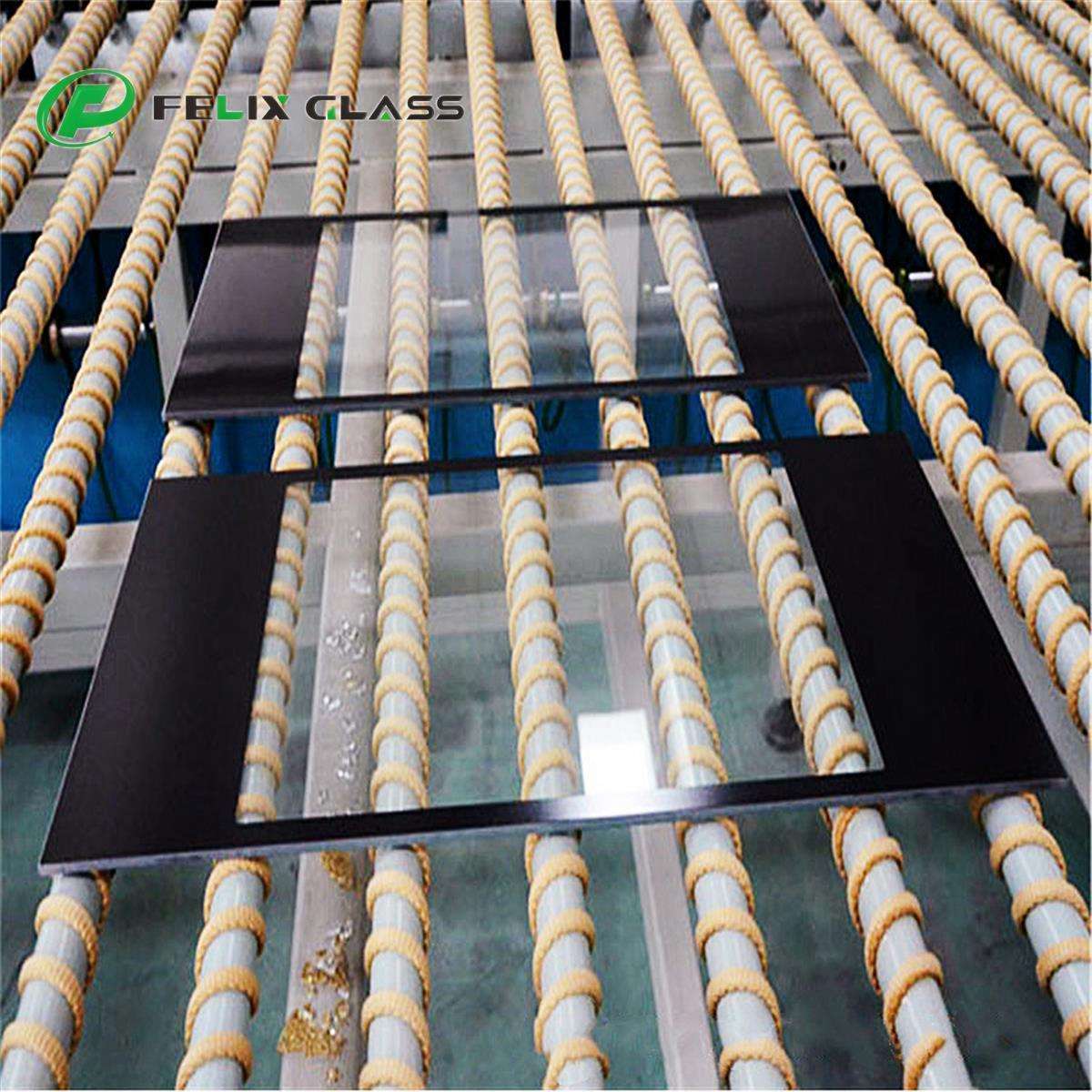
The source states 19+ years of optical-glass and coating experience, service for 1,000+ industrial customers, and 1,000+ completed projects. These figures should be confirmed during supplier qualification.
- ISO 9001 production-system reference plus RoHS and CE references
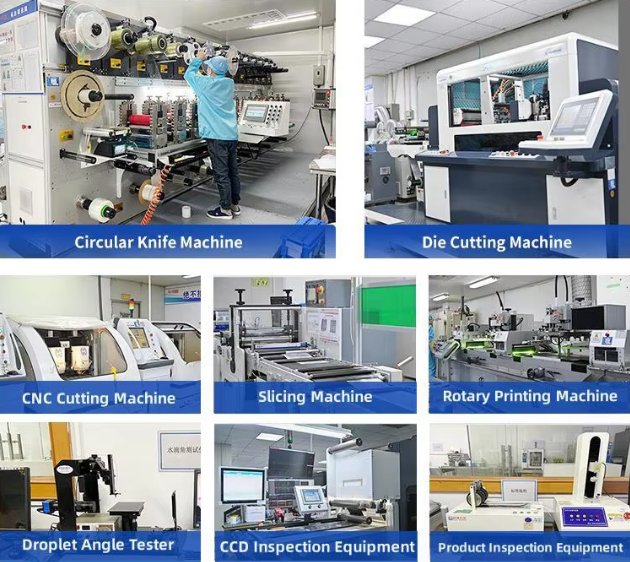
- In-house CNC machining, coating, printing, and inspection processes
- Prototype-to-production support and engineering review
- Raw-material inventory and production-scheduling controls
- Source-stated final inspection with reports available on request
- MOQ reference of 100–1,000 pieces depending on product complexity
Read the company profile on About Us and request current certificates, scope, capacity, and inspection documentation for the selected factory.
Engineering input
5. Design Files, Samples, and NDA Review
The source accepts drawings, sketches, and physical samples for concept-stage or production-stage review. Engineering review covers feasibility, material selection, and coating compatibility.
Supported formatsPDF, DXF, DWG, STEP, IGES, AI, EPS, and CDR. Convert text to outlines or include the required fonts.
Preferred engineering filesSTEP, DXF, and DWG are identified as preferred for dimensional review.
Reference imagesJPG and PNG can be used as visual references but may require dimensional clarification.
Physical samplesSamples can support reverse engineering, matching, and replacement projects.
ConfidentialityThe source states that NDA arrangements are available; terms should be agreed before sending controlled files.
Review outputConfirm the drawing revision, open questions, proposed process, tolerances, and sample plan in writing.
The Felix Glass home page provides a broader entry point to its material and processing information.
Material selection guide
6. Glass Materials, Thickness, and Display Size
The visible product attributes list customizable thickness, OEM/ODM support, custom size and shape, and “Optiwhite + Tempered + High Transmittance Glass.” The source also discusses clear, low-iron, smoked, soda-lime, aluminosilicate, high-alumina, borosilicate, and optical-glass options.
| General source thickness range | 0.25–8.0 mm, subject to material and process review |
|---|---|
| Display below 7 inches | 0.55–1.1 mm source guide |
| Display 7–15 inches | 1.1–2.0 mm source guide |
| Display 15–32 inches | 2.0–4.0 mm source guide |
| Display above 32 inches | 4.0–6.0 mm source guide |
| Application starting points | Strengthened glass for industrial use, low-iron glass for medical displays, AR+AG for outdoor review, BK7 or optical glass for optical systems, and borosilicate for elevated-temperature review |
Thickness guidance is not a structural calculation. Confirm impact, bending, edge support, opening geometry, touch sensitivity, bonding, temperature, and safety requirements on the actual assembly.

Drawing-based fabrication
7. Machining, Tempering, Printing, and Finishing
Machining
CNC cutting for custom profiles, laser cutting for small details, and waterjet cutting for thicker glass are listed. Methods may be combined after feasibility review.
Structures
Shapes, holes, slots, chamfers, countersinks, blind features, and 2.5D edges are available subject to thickness, edge-distance, and tooling limits.
Finishing
Grinding, polishing, and ultrasonic cleaning are listed. Cosmetic zones and cleanliness criteria should be defined on the drawing.
Chemical strengthening
The source assigns ion exchange in a potassium-nitrate bath to glass below 2.0 mm as a general process guide.
Thermal tempering
The source assigns heating and rapid quenching to glass above 2.0 mm as a general guide; geometry and substrate can change feasibility.
Printing
Screen and digital printing, Pantone/RAL/sample matching, and standard, heat-resistant, UV-resistant, light-diffusing, semi-transparent, and IR-transparent inks are listed.
Optical surface options
8. AF, AR, and AG Coating References
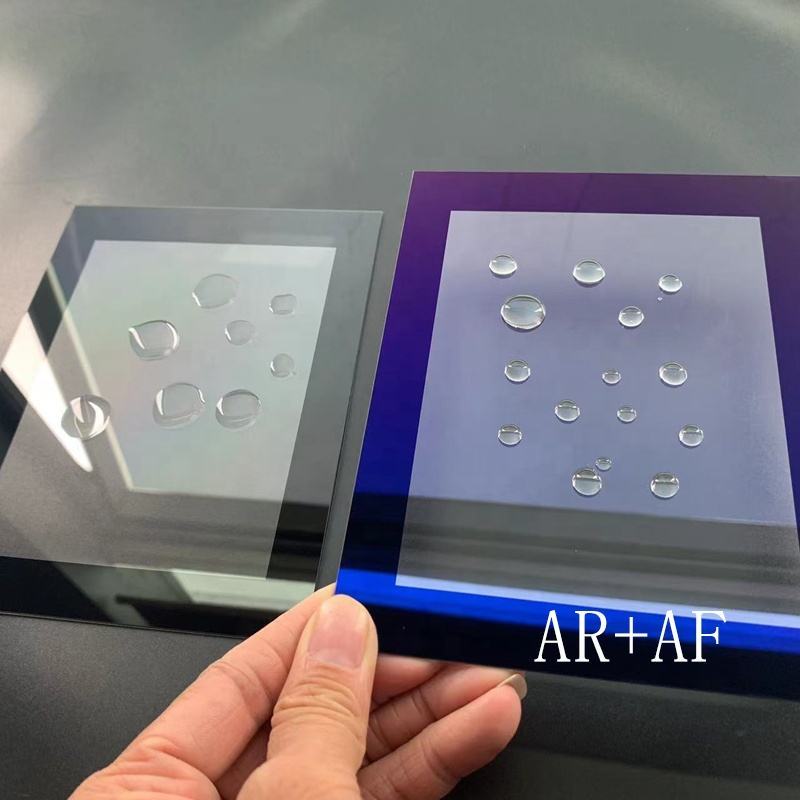
AF anti-fingerprint
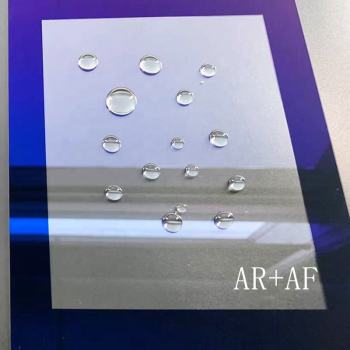
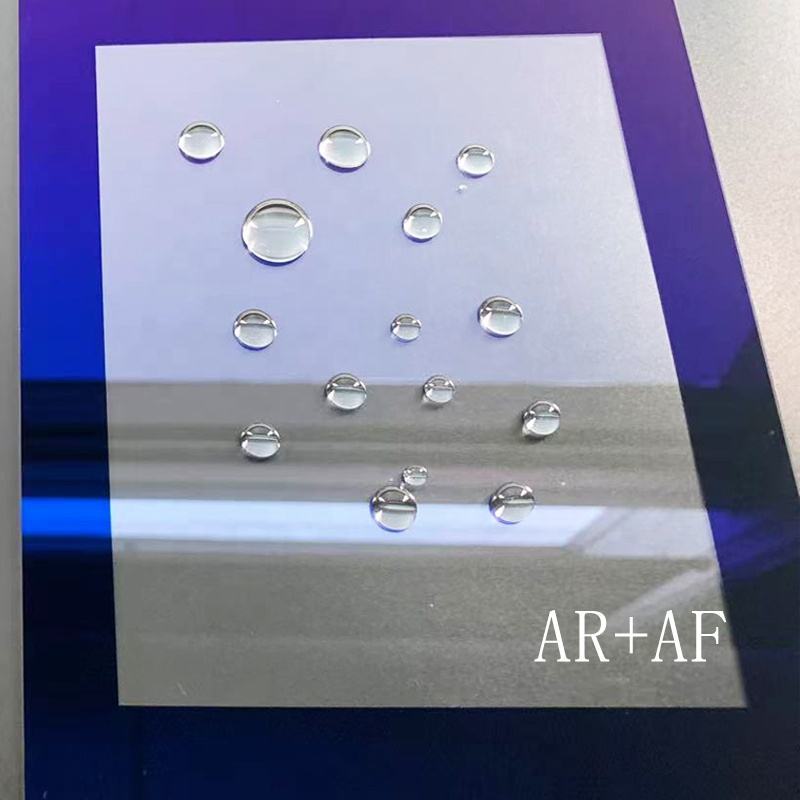
Designed to reduce fingerprint, oil, and stain adhesion. The source lists a water contact angle of at least 115 degrees; confirm the test liquid, volume, instrument, surface, and wear state.
AR anti-reflective
The source lists up to about 95% transmittance for single-side AR, up to about 98% for double-side AR, and reflection below 1%. Confirm wavelength range, incidence angle, substrate, coating sides, and measurement method.
AG anti-glare
Diffuses reflected light. Source gloss guides are above 80 for indoor use, 50–70 for mixed lighting, and 20–30 for touch panels. Balance gloss, haze, sparkle, image sharpness, and touch feel.
AR, AG, and AF can be combined, but the stack must be validated for the display, bonding method, lighting, touch frequency, cleaning chemicals, and wear target. Read related guidance in the Felix Glass blog.
Adjacent functional options
9. Mirror Electroplating and Infrared Window Options
After the AR/AG/AF section, the source describes metal and infrared functions as adjacent capabilities rather than default features of this model.
Metal-coated glass
Aluminum and chromium are listed for reflective layers, ITO for transparent conductive touch functions, and nickel for a metallic non-touch appearance. Listed uses include smart mirrors, switches, HMI panels, and decorative glass.
IR-transmitting windows
The source lists visible transmission below 2% and IR transmission above 90% at 820 or 940 nm, with IR coating, printing, black, or red filter options. Confirm spectral curves, angle, temperature, and sensor compatibility.
Source-record trust content
10. Customer Feedback and Evidence Review
The existing description contains a testimonial attributed to Bernat Bonnin, identified there as CEO of Medical Devices S.A., expressing satisfaction with product quality, responsiveness, ordering, and delivery. Independent verification, date, project scope, and permission to publish are not provided in the source record.
For supplier evaluation, use current drawings, approved samples, test reports, certificates, audit findings, inspection records, and order performance instead of relying on a testimonial alone.
Engineering FAQ
11. Display Cover Glass Engineering Questions
What is display cover glass?
It is the protective outer layer over LCD, OLED, TFT, or touch displays. It can protect the display while maintaining defined optical and touch performance.
How do AR, AG, and AF differ?
AR reduces reflection, AG diffuses glare, and AF reduces fingerprint and oil adhesion. Combined “3A” configurations require stack-level validation.
What is dead-front glass?
It appears dark when the display is off and allows selected graphics or display areas to become visible when backlit.
How do haze and AG surface count affect image quality?
Higher haze can reduce glare but may reduce sharpness. A double-AG configuration can diffuse more reflected light than single AG while introducing a larger clarity tradeoff.
Can the glass be curved, drilled, or customized?
Flat, 2.5D, curved, irregular, printed, drilled, and slotted designs are listed. Machining must be completed before tempering or chemical strengthening.
What is optical bonding?
It uses optically clear adhesive to join the cover glass and display. Adhesive, gap, rework, thermal, optical, and reliability requirements must be defined.
Procurement and quality FAQ
12. Quotation, Samples, Testing, and Delivery
The source provides planning references for procurement. Confirm every commercial term in the current quotation because complexity, tooling, factory loading, location, and validation scope can change the result.
| Quotation input | Drawing, dimensions, material, coating, quantity, and application details |
|---|---|
| Response reference | 2–24 hours in the source; confirm current response timing |
| MOQ reference | 100–1,000 pieces depending on complexity |
| Samples | Standard samples may be offered without product charge; custom samples may carry cost |
| Sample timing reference | 3–7 working days for many custom projects, subject to confirmation |
| Production timing reference | 10–15 working days depending on complexity, subject to confirmation |
| Payment references | T/T, PayPal, L/C, and other methods subject to the quotation |
| Quality references | IPQC, final inspection, transmittance, haze, reflection, thickness, hardness, contact angle, abrasion, and adhesion checks |
| Compliance references | ISO 9001, RoHS, and REACH; request current documents and verify scope |
| Shipping references | DHL, FedEx, UPS, and sea freight to Europe, North America, Asia, and the Middle East |
| Packaging reference | Foam, film, and shock-resistant crates in a multilayer packing system |
The source also states that expedited orders, NDA support, drawing-based production, cost review, inspection reports, and prototype-to-production supply can be discussed. Confirm feasibility and terms for the actual project.
Use Contact Us to request current certificates, inspection methods, sample terms, and delivery details.
RFQ checklist
Send project requirements
13. Request a Custom Touchscreen Cover Glass Quote
Send the application, drawing revision, dimensions, tolerances, substrate, thickness, strengthening method, AR/AG/AF requirements, coating side, optical targets, printing artwork, openings, edge details, bonding method, cleaning chemicals, environmental tests, quantity, documentation needs, and requested schedule.